
BCW 20: Substack
Alternative to attention economy
Substack began in 2017 as a lean attempt to give writers a way to charge readers directly for emailed newsletters.
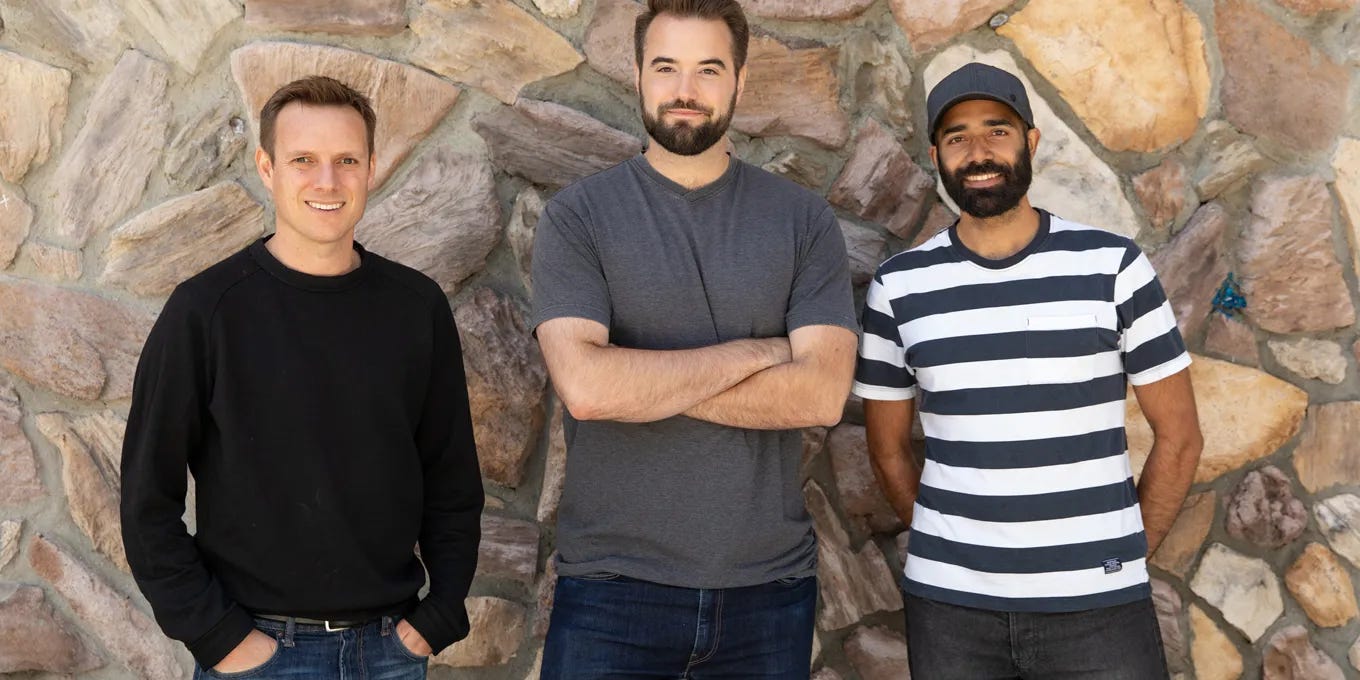
The founding team – Chris Best (former co‑founder of messaging app Kik), journalist Hamish McKenzie and technical architect Jairaj Sethi – shared a frustration with online media.
Advertising‑driven platforms optimised for attention, not quality, and the economics made professional writing precarious. Their hypothesis was simple: if a platform focused on subscriptions instead of ads, creators could earn a living, readers could support work they valued and both could escape the engagement treadmill.
This case traces the company’s evolution through January 2026, examining the context behind each inflection point, the choices made by its leaders, the alternatives they considered and the consequences that followed.
Building the Subscription Platform (2017‑2019)
Context
Substack’s origin story traces back to 2017, when Chris Best and Hamish McKenzie began grappling with the troubled state of online media. Best had drafted a “manifesto” decrying how ad-driven social media incentives were fueling “bad behaviors” in journalism and online discourse.
The prevailing wisdom said that news should be free and supported by advertising. Platforms such as Facebook and Twitter optimised algorithms to maximise time spent rather than quality of content. Writers who wanted to build independent businesses faced technical barriers: billing, email delivery, analytics and customer support were all hard.
Mainstream outlets, chasing virality on algorithmic feeds, were trapped in an “attention economy” that rewarded outrage over substance. In conversations with McKenzie, the two converged on a solution: shift the economic model to put readers – not advertisers – at the center[7]. If writers could be paid directly by their audience through subscriptions, they would be free to focus on quality content rather than clickbait. This insight laid the foundation for Substack’s model.
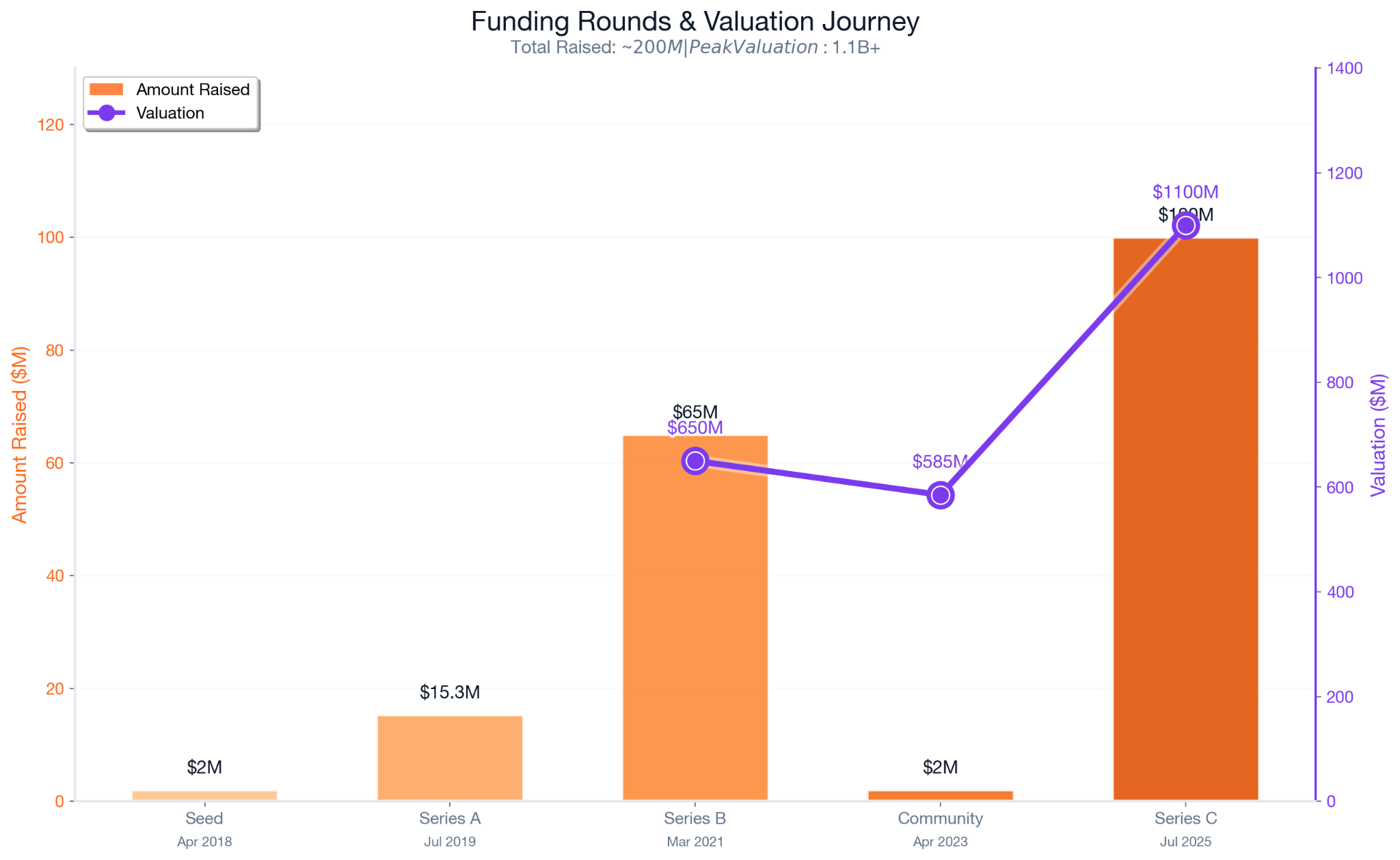
In mid-2017, Best and McKenzie officially teamed up, soon adding a third co-founder, Jairaj Sethi, as technical lead. The startup entered Y Combinator’s accelerator program in 2018, securing a $2 million seed round from investors like The Chernin Group and Andreessen Horowitz’s Andrew Chen.
Skeptics abounded. “No one’s going to pay for newsletters… there’s so much free content on the internet,” was a common refrain. The founders themselves weren’t certain people would subscribe in large numbers. Their initial choice was to focus narrowly on paid newsletters (as opposed to ad-supported content or a social-media-style platform) – a bet that reader willingness to pay would scale.
To prove the model could work, they targeted established independent voices, such as Bill Bishop’s Sinocism newsletter on Chinese politics, and offered them advances funded by Substack’s own capital. Instead of building broad features, the company prioritised reliable email delivery and an intuitive publishing interface.
Alternatives Considered
Advertising model: The team could have adopted a hybrid model combining ads with subscriptions. Competitors like Patreon allowed creators to monetize through memberships while still accepting sponsorships. An ad‑supported approach might have accelerated revenue but risked undermining trust and pushing the platform toward click‑bait, as Chris Best warned against reducing audiences to a commodity.
Partnership with existing platforms: Rather than build an independent infrastructure, Substack could have offered a plug‑in for WordPress or partnered with Medium. Ghost, an open‑source publishing platform, later pursued this route. Such integration would have lowered technical costs but limited control over the user experience.
Freemium community: Another option was to launch a social feed from the start, similar to Tumblr or Twitter, to drive discovery. The founders instead deliberately deferred a social feed until they had proven that direct subscriptions could sustain writers.
Consequence
The Bishop experiment paid off. Sinocism quickly converted around 1,000 subscribers to paid, providing Bishop a sustainable income (a paid tier was introduced at $11/month for his 30,000 free subscribers). This early win helped Substack “make it in the media business” by showing that an independent writer could convince thousands of people to pay for a newsletter.
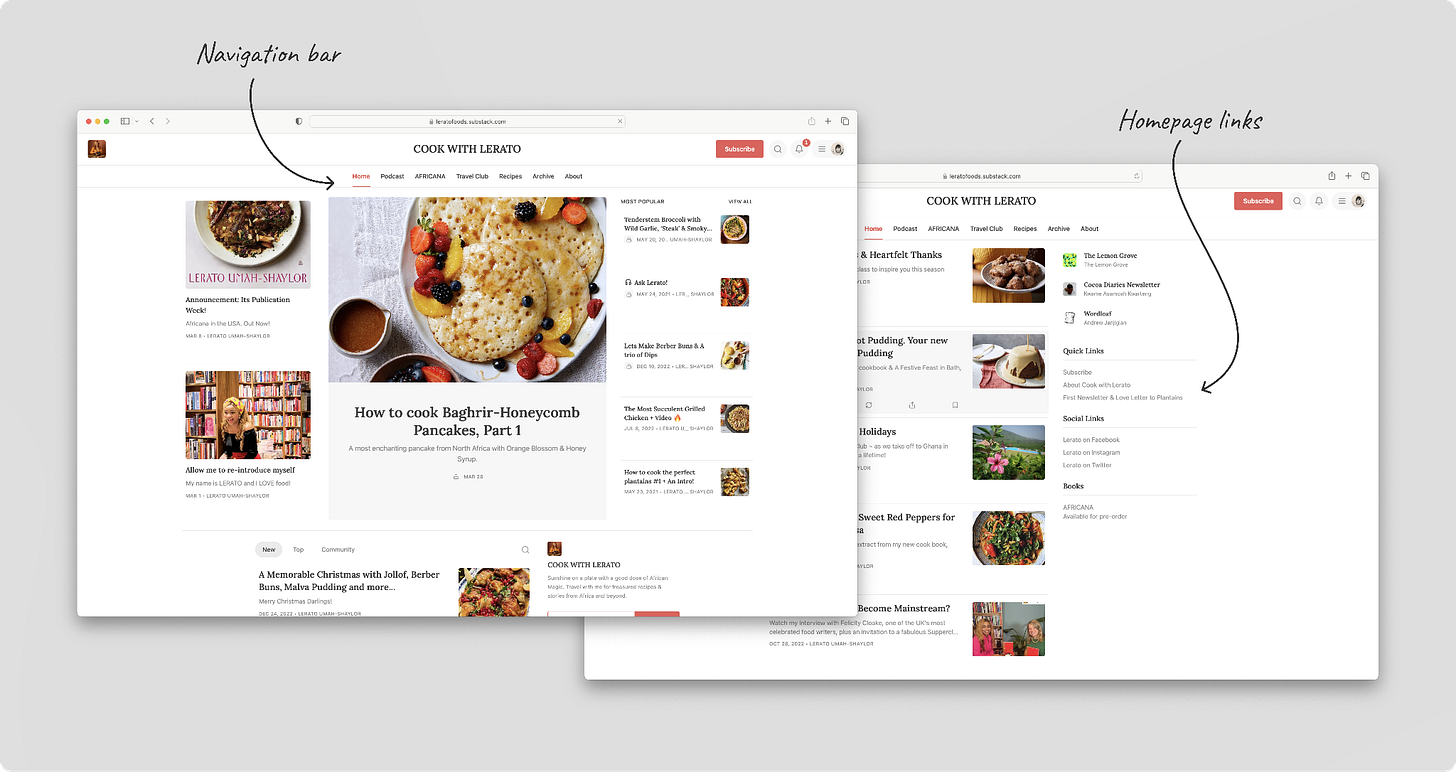
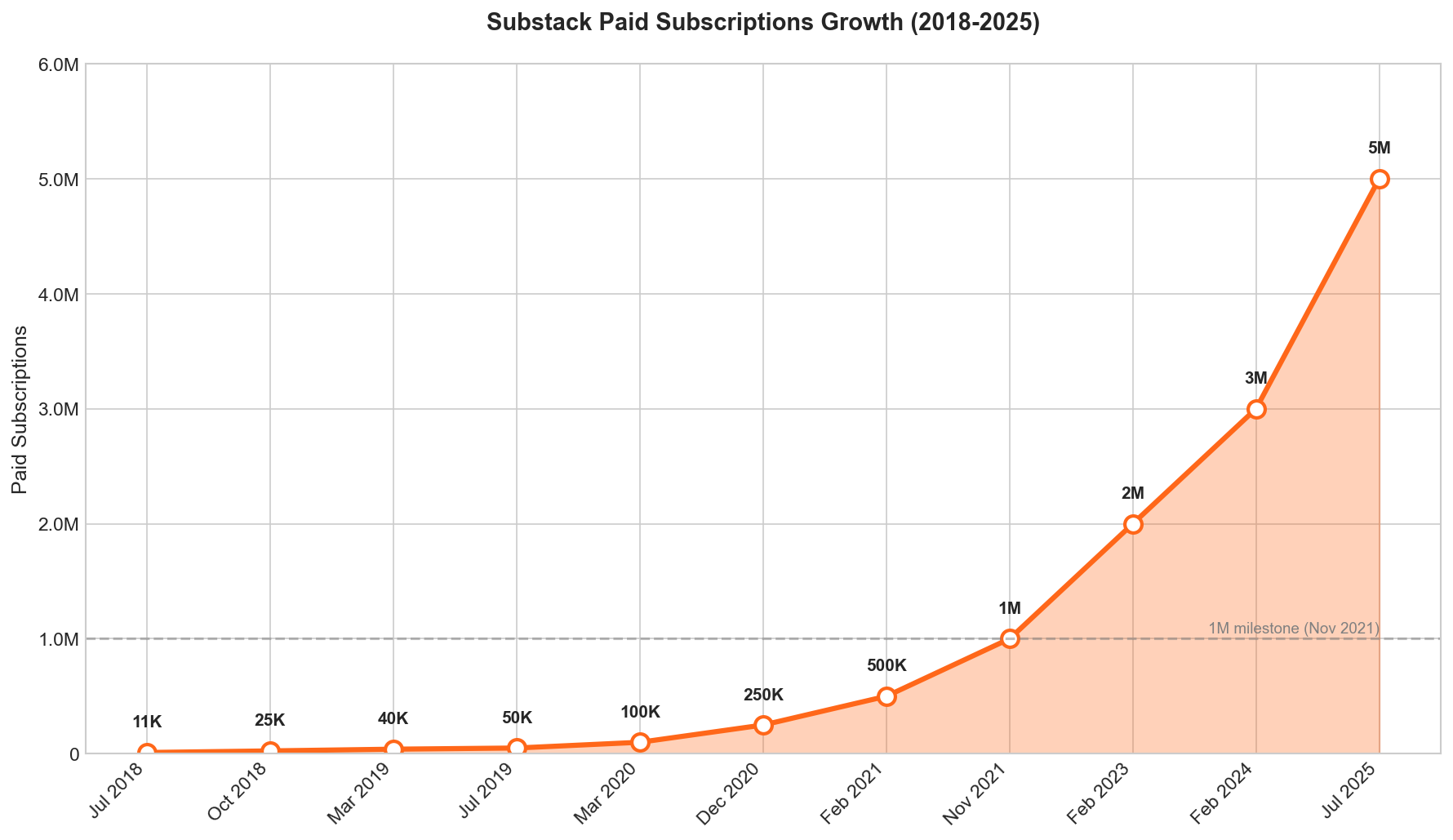
By July 2018, Substack hosted more than 11,000 paying subscribers across roughly 40 publishers[5]. Writers typically charged around $80 per year, and the platform’s 10 percent cut began to generate modest revenue. The straightforward value proposition – publish great work, own your audience, keep 90 percent of the revenue – resonated with independent journalists who had grown frustrated with Facebook’s algorithm changes.
The focus on subscriptions, however, limited growth because many readers were not yet accustomed to paying for newsletters. The company needed to prove that this model could scale.
By late 2019, Substack had attracted writers like Heather Cox Richardson (whose history/politics newsletter would become one of Substack’s top publications) and Andrew Sullivan (a veteran blogger). This influx built Substack’s reputation as a hub for independent journalism and niche expertise.
Active Learning Question
If you were launching a platform in 2017, would you have embraced advertising to kick‑start revenue, or would you have stuck to subscriptions? Consider how each choice shapes user incentives and long‑term strategy.
Acceleration and Early Controversy (2020‑2021)
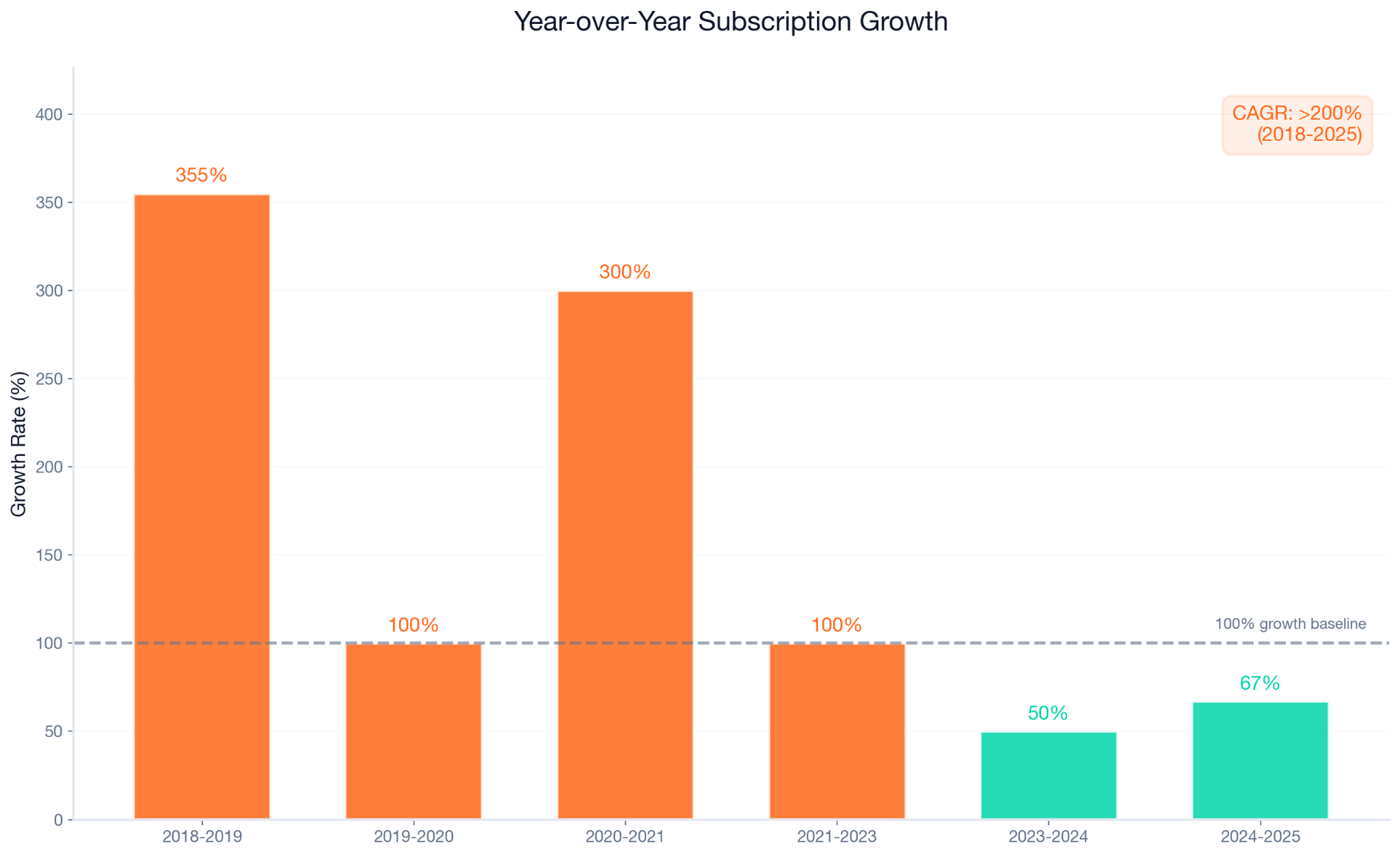
Growth accelerated during the Covid‑19 pandemic as layoffs and economic uncertainty pushed journalists to seek independent income. Paid subscriptions rose from 11,000 in 2018 to 50,000 in 2019, then to 100,000 by March 2020[6]. Still, Substack was tiny compared to mainstream media.
Substack began offering advances through its “Substack Pro” program to lure high‑profile writers. These deals granted writers a guaranteed income for one year in exchange for giving Substack 85 percent of revenue initially, then reverting to the normal 90/10 split after the advance was repaid[7]. Substack also introduced a legal‑support program called Substack Defender and a Local program that offered up to $100,000 to local news start‑ups with a 15 percent revenue share for the first year[10].
And there was a cost. By late 2020, Substack’s burn rate increased with all the advances and fellowships. Internally, the founders viewed these outlays as long-term investments: “We see these deals as business decisions, not editorial ones,” McKenzie wrote, emphasizing that they were seeding an ecosystem rather than building a traditional media company[13][44]. Detractors argued that if Substack was paying large advances to certain writers, it was “less like a technology platform and more like a media company” that should be accountable for the content it promotes.
This period set the stage for a strategic dilemma: How far should Substack go in acting like a publisher or talent agent (by financing and curating writers) versus staying a neutral platform?
Alternatives Considered
Avoid advances: Substack could have grown organically without offering advances, relying on network effects and small creators. Patreon built a large membership platform by focusing on grassroots creators. But without famous writers, the subscription model might have lacked early proof, so Substack needed another way to create credibility.
Stricter content moderation: The company could have pre‑emptively removed writers whose views conflicted with emerging social norms. Traditional media companies enforce editorial standards to protect brand reputation. Adopting stricter policies might have avoided later controversies but would have undercut Substack’s free‑speech branding and possibly alienated writers seeking autonomy.
Broader revenue share: Instead of 10 percent, Substack could have taken a smaller cut to lure more writers. Competitor Ghost takes no cut and charges a fixed monthly fee. A lower fee might have accelerated adoption but reduced funds available for product development and support programs.
Consequence
In March 2021, Substack raised a $65 million Series B led by Andreessen Horowitz. The company reported having “more than half a million people” paying for newsletters[11] and promised to invest heavily in tools and the Substack Pro program.
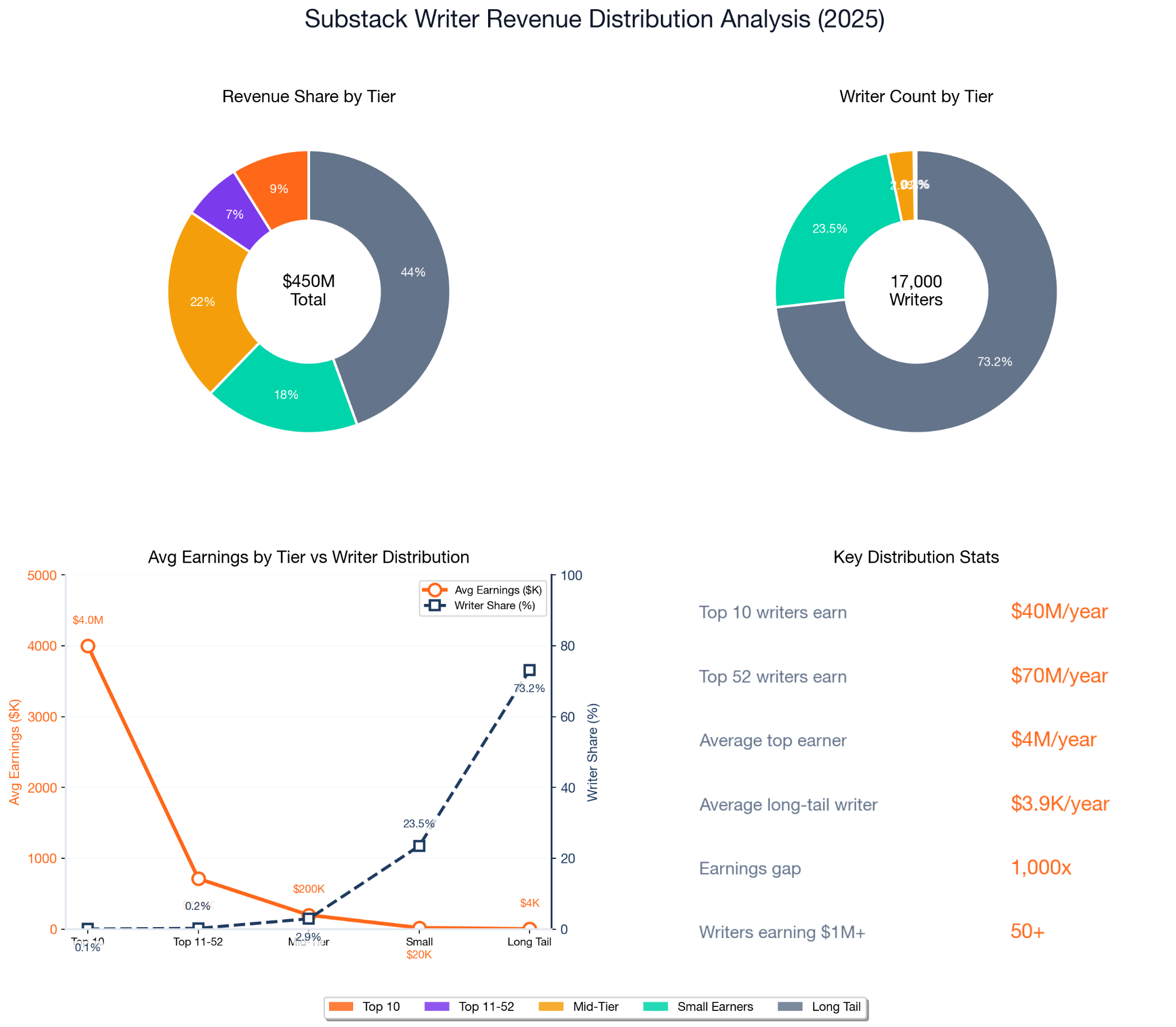
By November 2021, Substack celebrated one million paid subscriptions and acknowledged that the top 10 writers collectively generated $20 million annually[12].
A successful round with a well-known VC firm and such a significant milestone meant that their strategy, despite its controversies, worked.
Active Learning Question
When offering subsidies to creators, how can a platform avoid becoming a de facto publisher? Should it disclose the terms of those deals? Compare Substack’s choices with Spotify’s exclusive podcast deals or YouTube’s monetisation policies.
Managing Growth and Introducing New Features (2022‑2023)
Context
By 2022, Substack had proven the viability of paid newsletters and built a strong roster of writers. But another challenge emerged: reader engagement and discovery. Many subscribers arrived via external links (often from Twitter). Once signed up, they received content via email. This model, while effective for delivery, meant that the Substack app or website wasn’t a daily destination for most users.
The leadership recognized that to increase growth and reduce churn, Substack needed to offer more ways for readers and writers to interact within its ecosystem. This led to a series of product expansions beyond the core newsletter format.
Substack’s internal metrics likely showed that subscribers who followed multiple writers or engaged in comments had higher retention. There was also a defensive context: Twitter, long a key channel for writers to promote their Substacks, underwent chaos after Elon Musk’s late-2022 takeover. If Twitter became unstable or hostile to newsletter links, Substack risked losing a discovery pipeline. At the same time, upstart communities like Discord or Telegram were hosting discussions among creators and fans. Substack’s team saw an opportunity to integrate more social features, keeping readers in-house.
Starting in late 2021 and through 2022, Substack rolled out features to enhance the community and multimedia experience:
Substack Reader App: In early 2022, Substack launched a mobile app that aggregated all your Substack subscriptions in one feed. The app was pitched as a “beautiful, focused place to read your favorite writers” without the distractions of email or social media. This was a strategic move to own the reading interface and allow future in-app features.
Recommendations: Substack introduced a recommendation system where writers could endorse other Substack newsletters to their audience. This leveraged the trust between writers and readers to drive discovery, a very different approach from algorithmic feed ranking.
Substack Chat: Launched in November 2022, Chat allowed writers to host private group chats for their subscribers (like a built-in Discord/Slack). Chat kept those discussions on Substack instead of third-party forums, increasing platform stickiness.
Audio and Video: Substack added native support for podcast hosting in 2019, and by January 2022 it began testing video uploads. By late 2023, it had rolled out new video tools and even live video streaming, aiming to compete with platforms like YouTube for creators’ attention.
The boldest new feature came in April 2023: Substack Notes. Notes was essentially a microblogging feed within Substack, looking and feeling like Twitter with short posts, likes, and re-posts. The key difference, Substack argued, was context:
“While Notes may look like familiar social media feeds, the key difference is in what you don’t see… The Substack network runs on paid subscriptions, not ads. This changes everything.”
In announcing Notes, Hamish McKenzie emphasized that on Substack,
“people get rewarded for respecting the trust and attention of their audiences. The ultimate goal… is to convert casual readers into paying subscribers.”
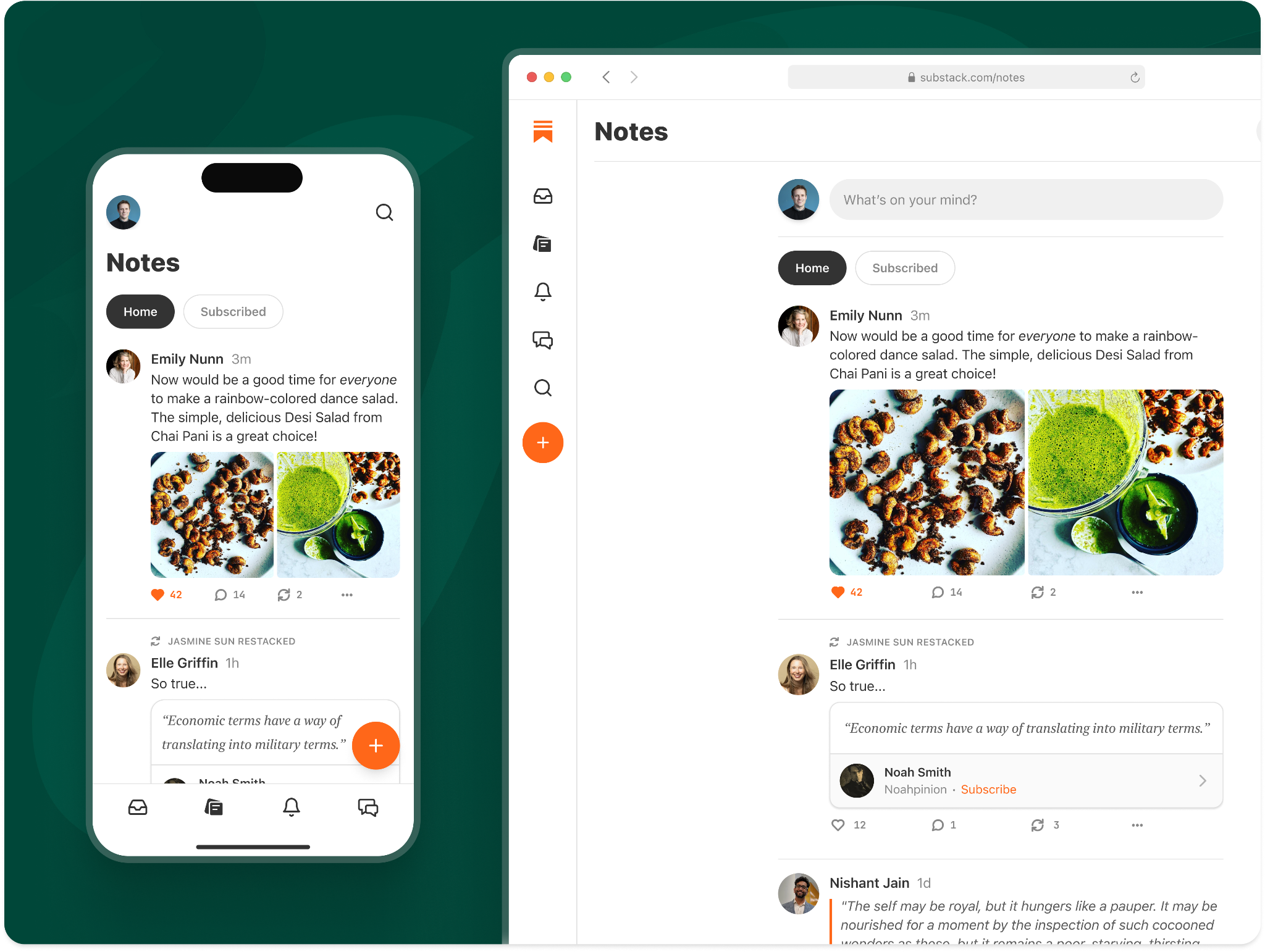
In other words, engagement on Notes wasn’t about maximizing screen time, but about enticing readers to find and support writers. This was a direct strategic choice to differentiate from Twitter’s attention-based model and to create an on-platform way for content to go viral without leaving the Substack ecosystem.
Alternatives Considered
Partnering with existing social networks: Substack could have integrated with Mastodon or ActivityPub protocols, enabling cross‑posting and decentralised federation.
Remain email‑only: Substack might have focused on being a pure email service, leaving discovery to third‑party channels. Ghost and ConvertKit follow this approach. Staying email‑only could have reduced moderation risks but limited network‑driven growth.
Consequence
The launch of Substack Notes triggered an immediate showdown with Twitter. Seeing Notes as a potential rival (and perhaps suspecting Substack had scraped Twitter’s data), Twitter temporarily blocked Substack links and marked them as unsafe in early April 2023. This was a crisis for Substack: many writers relied on Twitter for growth, and suddenly they couldn’t share their newsletters freely. Substack’s founders issued a rare rebuke, stating “we’re disappointed that Twitter has chosen to restrict writers’ ability to share their work. Their livelihoods should not be tied to platforms where… the rules can change on a whim.”
This public spat resulted in an uneasy truce after about six days, with Twitter lifting the restrictions. But it underscored an important reality: Substack’s expansion into social-style functionality had blurred the line between being a complementary tool to big platforms and being a competitor.
Active Learning Question
Imagine you are designing a new social feature for a subscription platform. How would you balance discovery with moderation? Compare Substack’s trust‑graph approach to TikTok’s algorithm or Mastodon’s decentralised federation.
Fundraising and Scaling (2022‑2025)
By mid-2022, despite robust growth in users and attention, Substack confronted a stark reality of the tech startup world: the need for financial sustainability. The company was still burning cash. The generous writer payouts and a growing team (94 employees as of mid-2022) meant expenses far outstripped revenue.
2022 was a brutal year for tech valuations. Rising interest rates and a bear market dried up late-stage venture funding. Companies that in 2021 could raise at 10× revenue multiples found VCs now scrutinizing burn rates and paths to profitability. Substack was no exception.
An Axios report in June 2022 revealed Substack had laid off 13 employees (~14% of staff) to cut costs. CEO Chris Best candidly told employees that Substack had been attempting to raise a Series C earlier in the year but the market downturn had scuttled those plans. Indeed, The New York Times reported in April 2022 that investors were valuing Substack at around $650 million, and by May 2022 Substack had “dropped the effort to raise money” as the market for high-growth tech funding soured. This left Substack in a difficult position: high ambitions without a new influx of capital.
Having raised a total of ~$86 million to date, it likely had some runway but not indefinite. Meanwhile, revenue growth had temporarily stalled in a sense – not because subscribers stopped growing, but because the end of the Substack Pro program meant Substack’s cut (10%) didn’t grow proportionally with GMV. Substack’s net revenue in 2022 was roughly $12.5 million, only marginally up from $11.9M in 2021. This flatlining occurred even though total paid subscriptions roughly doubled (from ~1 million to ~2 million) – a sign that the loss of the 85% revenue share deals shrank Substack’s take rate.
In 2023, with venture funding still scarce, Substack made a novel choice: open a community funding round. In March 2023, Substack invited its own writers and readers to invest via a Regulation Crowdfunding campaign on Wefunder. Initially targeting $2 million, demand was so high that they raised the cap to the legal maximum of $5 million (and ultimately took $7.8M from 6,688 investors). The round was done at a roughly $585 million valuation (down from the internal $650M of 2021, but avoiding a drastic “down round”). This “crowd IPO” approach had multiple advantages: it brought in cash to extend runway and it galvanized loyalty among the writer community (over 6,000 writers invested, per reports)
Alternatives Considered
Merge or sell: With capital scarce, Substack could have explored acquisition by a larger media or tech company. Patreon, Spotify or even Twitter might have integrated Substack’s subscription tools into their ecosystems.
Cut subsidies entirely: Substack might have eliminated advances and grant programs to conserve cash. This would signal self‑sufficiency but risk slowing growth and alienating writers reliant on support.
With the belt tightened in 2022 (layoffs and halting pricey writer programs) and a couple of smaller cash injections (community round in 2023, and likely some debt financing), Substack survived the lean period.
Elon Musk did offer to acquire Substack in 2023, as was later revealed: during an April 2023 phone call, Musk suggested buying Substack and even making Chris Best the CEO of the combined entity (presumably integrating with Twitter/X). Best and the board rejected the offer
Investor sentiment improved by 2025. In mid-2025, as the tech market rebounded, Substack finally managed to secure a major Series C funding. In July 2025, The New York Times reported Substack had raised $100 million at a $1.1 billion valuation, officially making it a “unicorn”.
Active Learning Question
If you were Substack’s CEO in 2022-2023, how would you manage high burndown and ensure liquidity for your company? Would you have enabled a different approach to funding? Was turning to the community a masterstroke in alignment, or a red flag that traditional investors lacked confidence?
Current status and future prospects (2025‑2026)
For a company that just a year prior resorted to crowdfunding $5 million, getting a $100M check was a validation that Substack’s model had enduring traction.
User engagement metrics following launches in 2022-2023 have been positive by the company’s accounts.
By late 2024, Substack claimed to have 35 million active subscriptions (free + paid), signaling that many readers follow multiple publications.
As of late 2025 – 50 million active subscriptions, 5 million paid subscriptions.
Substack touted that it had helped “more than 17,000” writers make money. More than 52 newsletters earned at least $500,000 annually. This growth suggests that features like Recommendations and Notes, which surface new writers, helped convert “casual readers into paying subscribers,” just as intended.
But by late 2025, Substack faced a contradiction it could no longer ignore. Its subscription-first model worked, but many writers were already selling sponsorships manually, with messy ops and inconsistent execution. Substack could either leave that money off-platform or formalize it and accept the cultural risk of “ads” contaminating the product’s incentives. It chose a constrained experiment rather than a business-model pivot.
In December 2025, Substack launched an opt-in newsletter sponsorship beta for a small group of creators. This was not a programmatic ad network or an automated marketplace. It was creator-led sponsorships inside newsletters where writers keep editorial control, while Substack provides infrastructure and reduces admin, including payment facilitation. During the beta, Substack said it would not take a revenue share.
Substack tried to add a second monetization rail without shifting creators toward reach-at-all-costs behavior. It positioned the program as focused on newsletters (not social features) and as direct partnerships rather than algorithmic allocation.
The unresolved questions were postponed to “after learning” and would determine whether this stays compatible with Substack’s identity: take rate, quality control, disclosure standards, and how to prevent the model from drifting toward the dynamics Substack was built to avoid.
The leadership signaled with confidence in the future: “These are just the very early days of a new ecosystem… there is a lot more to come,” they had written to stakeholders.
Substack enters 2026 as a disruptor turned incumbent in its niche. It changed the trajectory of online media by proving that individuals can be viable media businesses. Each major decision – from paying writers, to defending contentious speech, to building social features, to raising capital in unconventional ways – has brought it here.
Active Learning Question
Imagine you are an advisor to Substack’s CEO in early 2026. What would you identify as the top strategic priority? Expanding internationally to find new markets? Or perhaps refining the product to better support mid-tier, small-tier English-speaking writers? Remain ad‑free? Acquire or build an ad network? Introduce tiered subscriptions?
Lessons
Alignment of Incentives as Strategy. Substack’s 10% revenue-share model aligned its success with that of its writers, fostering trust and long-term commitment. By rejecting advertising and making readers the customers, Substack ensured that creators could focus on quality over clicks. This alignment proved a competitive advantage over ad-driven platforms, albeit at the cost of short-term revenue.
Transparently manage subsidies. Advances helped Substack prove the viability of paid newsletters, but opaque selection processes blurred the line between platform and publisher and triggered accusations of bias[7]. Clear criteria and transparency could have mitigated some backlash. Substack’s decision to treat these as business deals, not editorial endorsements, was controversial
Network effects must be earned through product design. Substack’s recommendation network and Notes feed drove significant subscription growth, showing that peer recommendations can outperform algorithmic virality.
Diversification requires careful framing. Substack’s pivot to advertising acknowledges economic reality but risks eroding its brand as an ad‑free haven. Offering opt‑in sponsorships with clear guidelines and maintaining high subscription revenue can help retain trust while exploring new income streams.
Adaptability in Funding Strategy. Substack’s journey from VC darling to crowdfunding and back to VC shows creative adaptability in financing. When market conditions changed, it found a novel way to raise cash that doubled as a loyalty program for its users. This move not only extended runway but turned users into evangelists-investors, demonstrating how engaging a community in ownership can be a strategic lever. At the same time, the willingness to say “no” to an acquisition offer and hold out for a better capital opportunity in 2025 illustrates disciplined commitment to the company’s independence and vision.